
Pressure Doesn’t Have to Travel: How Stressed Leadership Erodes Culture, and What Healthier Leadership Looks Like

There is a quiet pattern unfolding inside many workplaces that rarely appears on organizational charts, performance dashboards, or leadership scorecards. It is the transfer of pressure.
A leader receives pressure from above. Deadlines tighten. Expectations escalate. Resources thin. Fatigue accumulates. Instead of being metabolized, managed, or reframed, that pressure moves downward—often landing on employees in the form of urgency, sharp tone, unrealistic demands, or dismissive communication.
The original stress may be real. The downstream impact, however, is preventable.
Many professionals recognize this pattern not as an abstract leadership theory but as lived experience: employees leaving meetings in tears, dreading interactions with supervisors, developing chronic tension symptoms, or quietly disengaging while remaining physically present. These outcomes are rarely the result of the work itself. They stem from how pressure is transmitted through people.
The Hidden Cost of Transferred Stress

When leadership stress goes unmanaged, it does not remain contained within the leader. It spreads through teams in several predictable ways:
Emotional spillover: Frustration, impatience, or exhaustion expressed toward employees.
Manufactured urgency: Every task framed as immediate, critical, or high stakes.
Disrespect normalization: Curt communication or dismissiveness justified as “pressure.”
Fear-based compliance: Employees perform to avoid negative interactions rather than to achieve shared goals.
This pattern creates environments where employees operate in sustained vigilance rather than focused productivity. Over time, this state contributes to:
Burnout and disengagement
Stress-related health symptoms
Reduced psychological safety
Quiet turnover or presenteeism
Cultural erosion across teams
Organizational culture can degrade rapidly when pressure becomes a leadership style rather than a situational reality.
Pressure Is Real. Transmission Is Optional.
It is important to acknowledge a fundamental truth: leadership roles do carry legitimate pressure. Supervisors often navigate competing demands, limited authority, and accountability for outcomes they cannot fully control.
The issue is not that leaders experience stress. The issue is when leaders export that stress rather than regulate it.
There is a critical distinction between:
Communicating urgency and transferring anxiety
Holding accountability and applying pressure
Addressing problems and projecting frustration
Healthy leadership absorbs pressure, processes it, and translates it into clarity. Unhealthy leadership passes it through unfiltered.
The Cultural Damage of Downward Pressure

When stress cascades downward unchecked, the organizational consequences extend beyond individual discomfort.
1. Psychological safety collapses
Employees become cautious, guarded, or silent to avoid negative interactions. Innovation and initiative decline.
2. Trust fractures
Respect is foundational to authority. When employees experience disrespect, authority loses legitimacy.
3. Performance narrows
Cognitive resources shift from problem-solving to self-protection. Employees focus on avoiding mistakes rather than creating solutions.
4. Health impacts emerge
Chronic workplace stress has well-documented links to sleep disruption, anxiety symptoms, cardiovascular strain, and other health effects. Employees often attribute these symptoms to workload when the actual driver is relational stress.
5. Culture deteriorates quickly
Stress behaviors replicate. Employees who experience pressure often mirror it laterally or downward, spreading the pattern.
In many organizations, culture is not eroded by strategy failure. It is eroded by unmanaged leadership stress.
A Healthier Leadership Frame: Pressure Without Harm

A powerful reframing is possible: pressure does not require emotional weight.
A constructive leadership mindset might be summarized as follows:
Between every task or problem and its resolution lies a pathway. That pathway does not need to be filled with stress or pressure.
This perspective separates the existence of work challenges from the emotional environment in which they are addressed.
Leaders can experience urgency without creating distress. They can address problems without amplifying pressure. They can maintain standards without diminishing people.
This is not avoidance. It is regulation.
Why Leaders Transfer Stress
Understanding the mechanism helps interrupt it. Leaders tend to transmit pressure when:
They lack emotional regulation skills under strain
They equate urgency with intensity
They normalize harsh environments from prior experience
They lack safe channels to process their own stress
They fear failure or scrutiny from above
They operate in chronic burnout themselves
In many cases, transferred pressure is less about intent and more about depletion. Burned-out leaders often default to survival behaviors that prioritize speed over respect.
However, impact—not intent—shapes culture.
The Leader’s Responsibility: Containment
Healthy leadership requires pressure containment: the ability to receive stress without amplifying it.
This involves three core capacities:
Regulation – managing one’s emotional state before interacting
Translation – converting pressure into clear priorities and expectations
Respectful delivery – maintaining dignity in communication regardless of urgency
Employees can accept demanding work. They struggle with disrespectful delivery.
Protecting Professional Peace

Employees increasingly recognize the need to protect their psychological well-being in high-pressure environments. One approach involves cognitive separation:
The problem belongs to the work.
The pressure belongs to the system.
The emotional weight does not have to be internalized.
This boundary allows professionals to engage with tasks without absorbing relational stress. It is not disengagement; it is preservation.
However, employees should not have to defend themselves from leadership stress as a routine condition of employment. Sustainable workplaces require systemic change, not individual coping alone.
Creating Workplaces Where Pressure Does Not Cascade
Organizations seeking healthier cultures must move beyond productivity metrics and address how pressure moves through hierarchy.
Key leadership norms include:
Urgency communicated without hostility
Accountability delivered without disrespect
Problems addressed without panic
Feedback provided without humiliation
Expectations clarified without emotional escalation
These norms do not reduce performance. They increase it by preserving cognitive capacity and trust.
A Call for Conscious Leadership
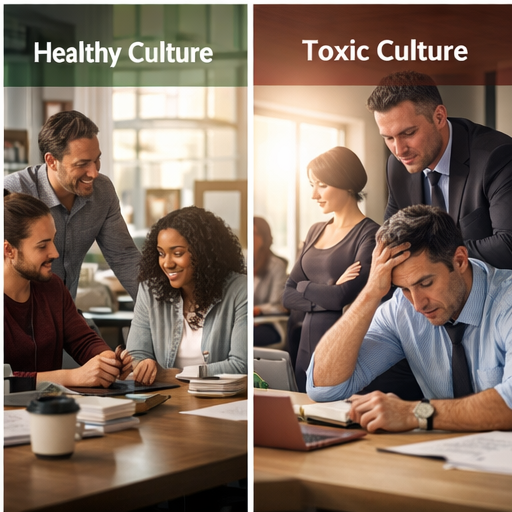
Many employees today are not exhausted by work itself. They are exhausted by the emotional climate surrounding it.
The modern workplace challenge is not eliminating pressure. It is preventing its transmission.
Leaders who learn to absorb and reframe stress create environments where:
Employees think clearly
Problems are solved faster
Health is protected
Trust grows
Culture stabilizes
Pressure may enter through leadership roles. It does not have to pass through them.
Between every problem and its solution, there is a path. That path can be direct, focused, and respectful.
It does not need to be paved with stress.

About Mon Amie’s Business, Wellness & Learning Solutions
At Mon Amie’s, we restore hope, remove barriers, and strengthen the environments that shape children, families, and communities. Through our Break the Cycle™ initiative, we work to interrupt generational patterns affecting youth and families by expanding mentoring, leadership development, academic stability, and family support.
Guided by compassion, equity, and lived experience, we create conditions where young people and those who support them feel seen, valued, and equipped to grow — leaving families and communities stronger than we found them.
We advance Break the Cycle™ through community-based pathways including youth leadership, academic support, athletics-based development, and family education, alongside organizational consulting that helps workplaces and institutions build supportive, equitable cultures.
Our vision is communities where supportive environments surround every person and opportunity is not limited by circumstance.
Mon Amie’s Business, Wellness & Learning Solutions does not provide medical advice, diagnosis, counseling, therapy services, or treatment. Any information published on this website or by this brand is not a substitute for medical advice. Please consult a healthcare professional before making decisions regarding your health.